
AI made code cheap. Judgment is still expensive.
We take on the software initiatives everyone else says are too hard, and we finish them. Twenty years, around twenty clients, most of whom stayed three to five years and came back with the next one.
None of these savings came from typing faster.
After $50M and four years of failed builds
Live in 10 months, under $1M
A Fortune 5 retailer’s B2B marketplace had defeated internal teams and outside vendors. We delivered the MVP that went live to 100,000+ merchants and millions of products.
Read the case studyAgainst a 5-year, $25M estimate
Replaced in 18 months, under $2M
Replacing a global product catalog of millions of items — in flight, without taking the old one down. The replacement ran its ETL ten times faster.
Read the case studyAfter two abandoned attempts
800+ bots, 90% cheaper to build and maintain
KYC data pulled from 800+ sources for a Big 4 accounting firm, after two previous attempts were abandoned as too expensive to run.
Read the case studyClient names withheld by agreement. References available on request.
When clients call us
Most engagements start in one of two places.
A major initiative is in trouble
The date has moved twice. The architecture is fighting the roadmap. A vendor has delivered something nobody can maintain, or the estimate came back at five years and eight figures. You need someone who has seen this exact shape before and can see what is wrong with it.
That is most of our work. Every number at the top of this page came from a project that was already in difficulty when we arrived.
You need a team, or just a straight answer
You know what you want to build and you need people who can actually build it, or you need to decide between three architectures before you commit a year to one of them.
We staff small and senior. A small team that has done it before can outperform a much larger one learning as it goes, and usually costs less — which matters more now that good engineers with good AI tooling accomplish what used to need a much larger team. We pass that saving on rather than billing for seats.
What we do
Software strategy & architecture — deciding what should be built, what it should cost, and whether the plan survives scrutiny. And software engineering & delivery — building, replacing and rescuing the systems that have to work.
We put AI into production — in our process and in our product.
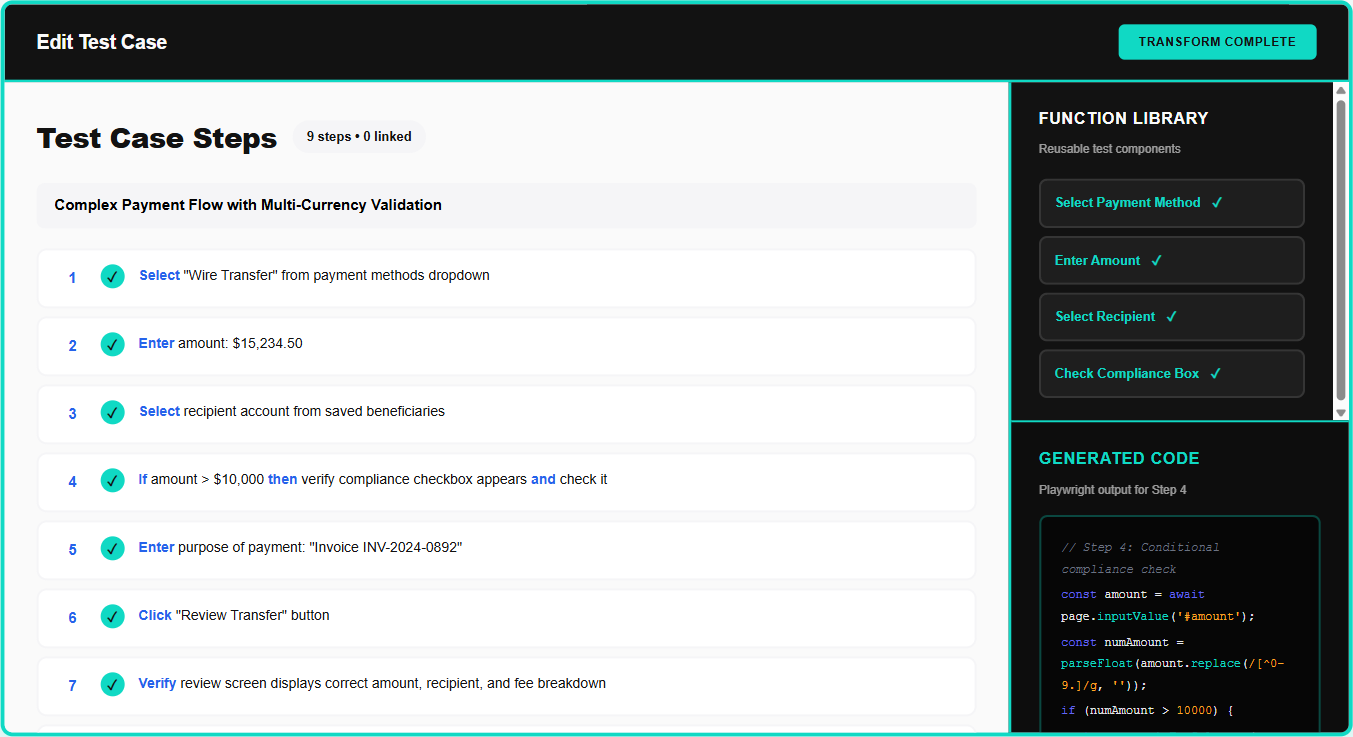
EverTest turns plain-English test cases into production Playwright and Selenium code, in bulk, with human QA in the loop. EverTest is a separate company. Our founder is one of its co-founders, and SWStrategies designed and built the platform. More at evertest.ai.
That matters to you for a practical reason. Plenty of firms will tell you they do AI. We have had to make an AI system behave reliably against real applications, every day, with customers watching — so we know what it genuinely costs and where it breaks.
What a rescue actually looks like
The catalog replacement, drawn out. Nobody saved $23M by writing faster code — the saving is in the shape of the plan, and the shape is the part we are hired for.
How the first six weeks work
Choosing an outside engineering team is slow, opaque and mostly done on vibes. So we go first: a fixed-fee six weeks that ends in something you can judge — and if you go ahead with the full project, that fee comes off the first invoice.
-
You name the problem
Not the tidy version for the steering committee — the one that is actually hurting. We will ask uncomfortable questions about history, constraints and who has tried before.
-
We build the context
Architecture, data, dependencies, the team, the politics. This is the step most vendors skip, and it is why their estimates are wrong.
-
Within six weeks, something you can judge
Usually a proof of concept running against your real constraints. Sometimes an architecture, a validated plan or a tested technical direction — whichever one actually settles your question. By week six you will know how we think and how we estimate, and whether you want us. So will we.
Who you would actually be working with
Founded in 2006 by a CTO who was tired of watching projects fail for reasons that were entirely preventable, nearly all of them about context lost in a handoff. We stayed deliberately small.
2006founded
3–5 yrstypical relationship
Mostlyrepeat or referral work
Twenty clients in twenty years is the number we are proudest of. Nearly every client has given us several projects over several years, and the work arrives through people who worked with us somewhere else.
Tell us what’s stuck.
An hour with your team, at no cost, and a straight answer about what we would do.